
Proto · Press Dispatch No. 01

The Human Phenome.

A biomarker wallet. Tuned to your biology. A founder dispatch from Ryan Hooks, on the intelligence layer for one human at a time.

Minneapolis · Madison · Brooklyn · Wageningen · Switzerland

I · The Question

The question that wouldn’t leave me alone

Twelve years ago I stood inside a greenhouse outside Wageningen and watched biology get measured for the first time.

Not sampled. Not guessed at. Measured. Continuously.

Cameras in the ceiling rendered every leaf in three dimensions. Hyperspectral sensors read photosynthetic efficiency in real time. Thousands of plants rode conveyors past instruments that logged stem length, leaf area, color, water uptake, and stress response under precisely controlled temperature, humidity, and light. Every plant had a genome. Every plant had an environment. Between the two, a signal, being written into a database. The phenotype (Wageningen University).

That signal was the thing biology had spent a hundred years trying to hold still long enough to look at.

The building was the Netherlands Plant Eco-phenotyping Centre. NPEC. A joint facility of Wageningen University and Utrecht University, built to “analyse genetic interactions between plants and their environment in unprecedented detail” (Wageningen University). NPEC’s own charter puts the stakes plainly: “almost all our food, feed and materials will be derived from plants” (NPEC). I’ve called it a €22M plant-phenotyping investment on my own site (ryanhooks.net). It is one of the densest agricultural-measurement campuses on Earth.

I was there as part of a founder cohort at one of the top agriculture universities in the world. The work that came out of it was Plant Vision™, a computer-vision system for controlled-environment agriculture, built with Syngenta and Hoogendoorn. It won a €2M Dutch Top Sector grant. In benchmark trials it hit $75 per square meter against Microsoft’s $72 (ryanhooks.net).

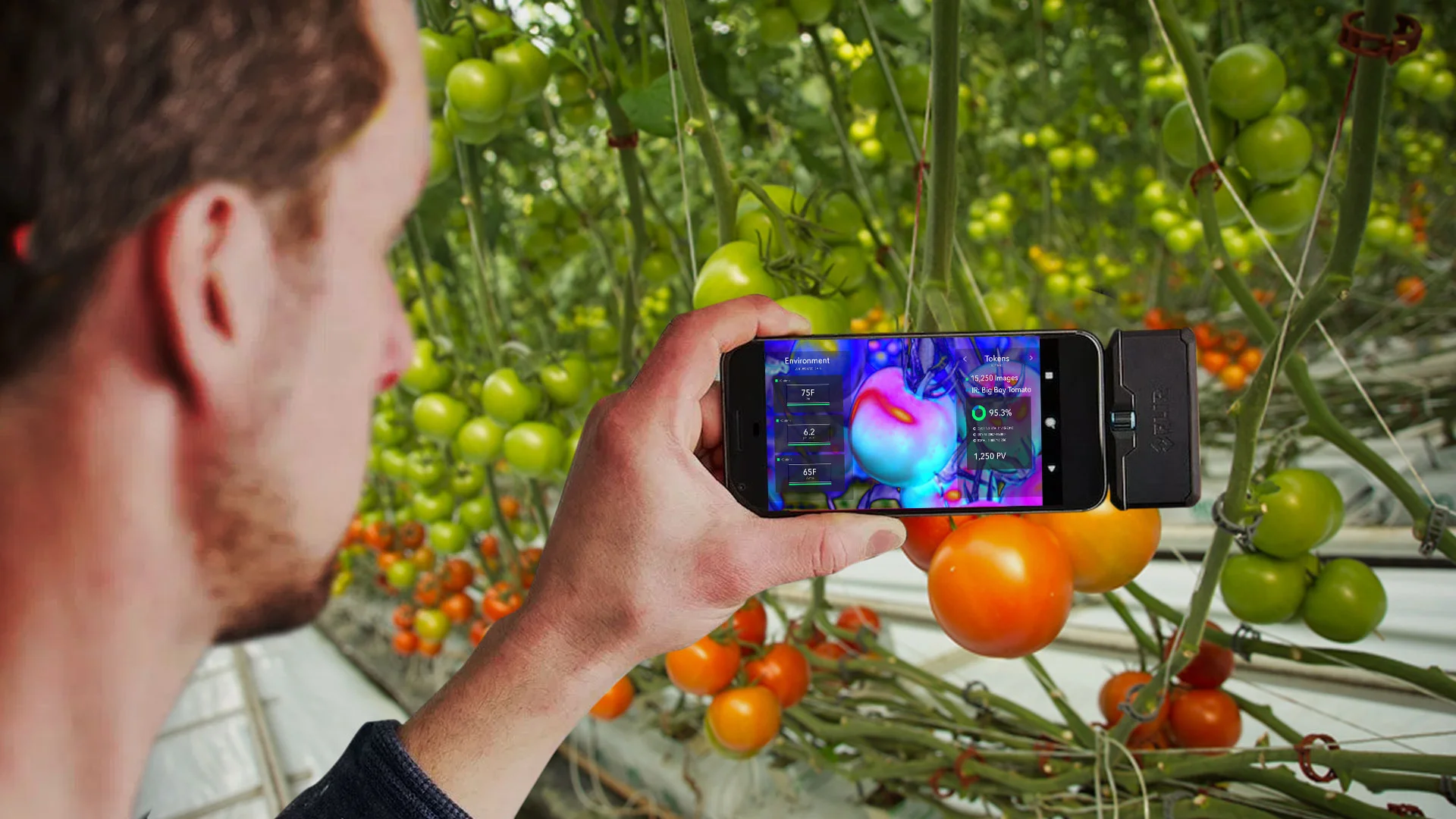
Plant Vision AR overlay on a Dutch tomato vine. Big Boy Tomato 95.3 percent, environment and token readouts pulled live off the plant.
Plant Vision™ prototype, Dutch tomato greenhouse. The phone reads variety, temperature, pH, water, and yield tokens directly off the plant. (plantvision.org)

I walked out of that greenhouse with one question I couldn’t put down. If we can do this for a tomato, why can’t we do it for a human.

Proto is the answer I stopped waiting for. The product lives at globalproto.com. I live at ryanhooks.net. The body is the spacecraft. Madison, Wisconsin is the launchpad. Two rivers, one body, one horizon (ryanhooks.net).

II · Ten Years

Ten years studying living systems

The arc that ends at Proto started with plants and fungi.

I trained at the Savannah College of Art & Design. That was the root of all motion, editorial, and systems work that followed (ryanhooks.net). Broadcast production. Six twenty-second Johnnie Walker spots. Compositing on the Hype Williams cut. Documentary work. A run of Anthem Magazine interviews with Jane Goodall, Michel Gondry, Marina Abramović, Dustin Lance Black, and others. Motion, editorial, and systems, in that order. Each one taught me a different way to hold a lot of signal in my head at once.

Then I pivoted. Cameras pointed at people became cameras pointed at biology.

Ecology. Mycology. Plant phenotyping. Nutrition science. Wearable physiology. I worked with chefs and clinicians. I spent time in San Francisco with the early wearable and quantified-self community. I spent time in Peru, where traditional foodways make the input-and-output loop between what you eat and how you feel legible in a way most of American life is not. I took trains into the Dutch agricultural belt. I kept ending up back at NPEC and the Wageningen campus.

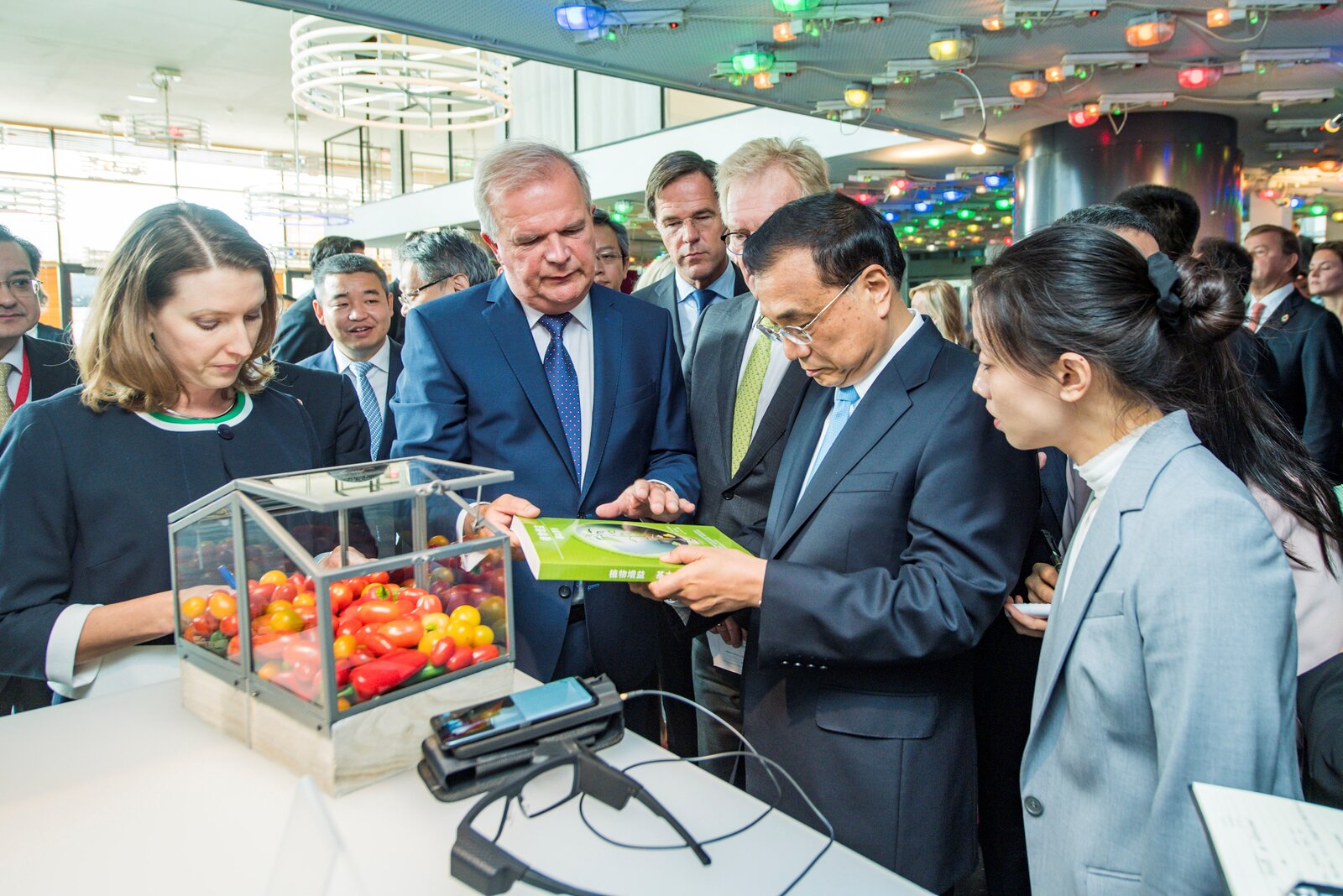
In August 2018 I demonstrated augmented plant-vision technology to visiting Chinese leadership. Two months later, on October 16, the funding lined up. One foot in the Netherlands, one in Silicon Valley. Many people told us we were two to three years ahead of the curve (ryanhooks.net).

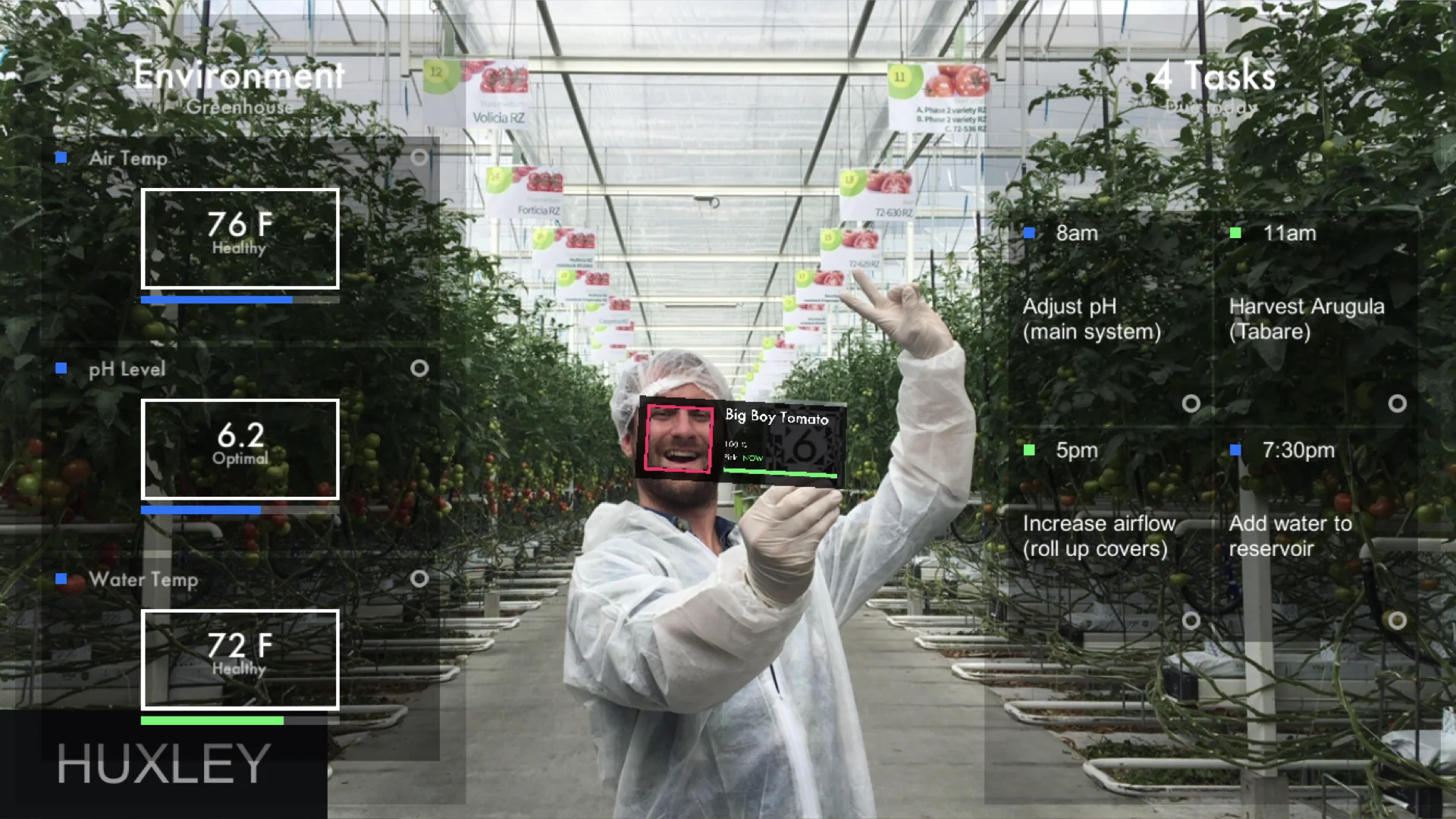
Plant Vision on a tomato grower with HUXLEY branding. Air temp 76F, pH 6.2, water 72F, and a task list overlaid on the crop.
Huxley Technologies field demo, Dutch high-tech greenhouse, 2018. Environment and task management surfaced as an operating layer on top of the physical crop.

Receipts. Top Sector Tuinbouw & Uitgangsmaterialen proposal, May 2018.

The proposal file is on my hard drive, dated May 2018. Project number TU18145. Title: Augmented horticulture. Understanding Plants via Augmented Reality. Coordinator on the cover page: Ryan Hooks, Huxley Technologies B.V., contact@huxley.io. Research co-lead: Rick van de Zedde, Wageningen University & Research. Budget: €960,000 over four years, 2019 through 2022. €480K in TKI Tuinbouw & Uitgangsmaterialen public funding, €240K in-kind and €240K cash from the industry consortium.

Consortium partners on the signature page: Syngenta, K+S, Hoogendoorn, LetsGrow, 30MHz, OSRAM, Somni Corporation, CombiVliet, AFAQ Group (Dubai). Six use cases scoped, A through B: tomato counting for vine harvesting, harvest assist by ripeness, botrytis detection, data annotation via voice, sensor-data visualization on the plant, and plant-growth visualization across time. The proposal cites the Tesla Unity engine as a rendering reference, an Nvidia GTC Munich invitation, EU EPPN2020 and EMPHASIS-PREP as anchor programs, and Kom in de Kas 2019 as the public showcase. Plant Vision™ is described in the plainest language I still use today. “Plant Vision™ allows you to understand everything from the microclimate to the microbiome” (plantvision.org).

That is the direct genetic material of Proto. Same team logic. Same operating-layer instinct. Same insistence that the interface belongs on top of the biology, not off to the side in a dashboard.

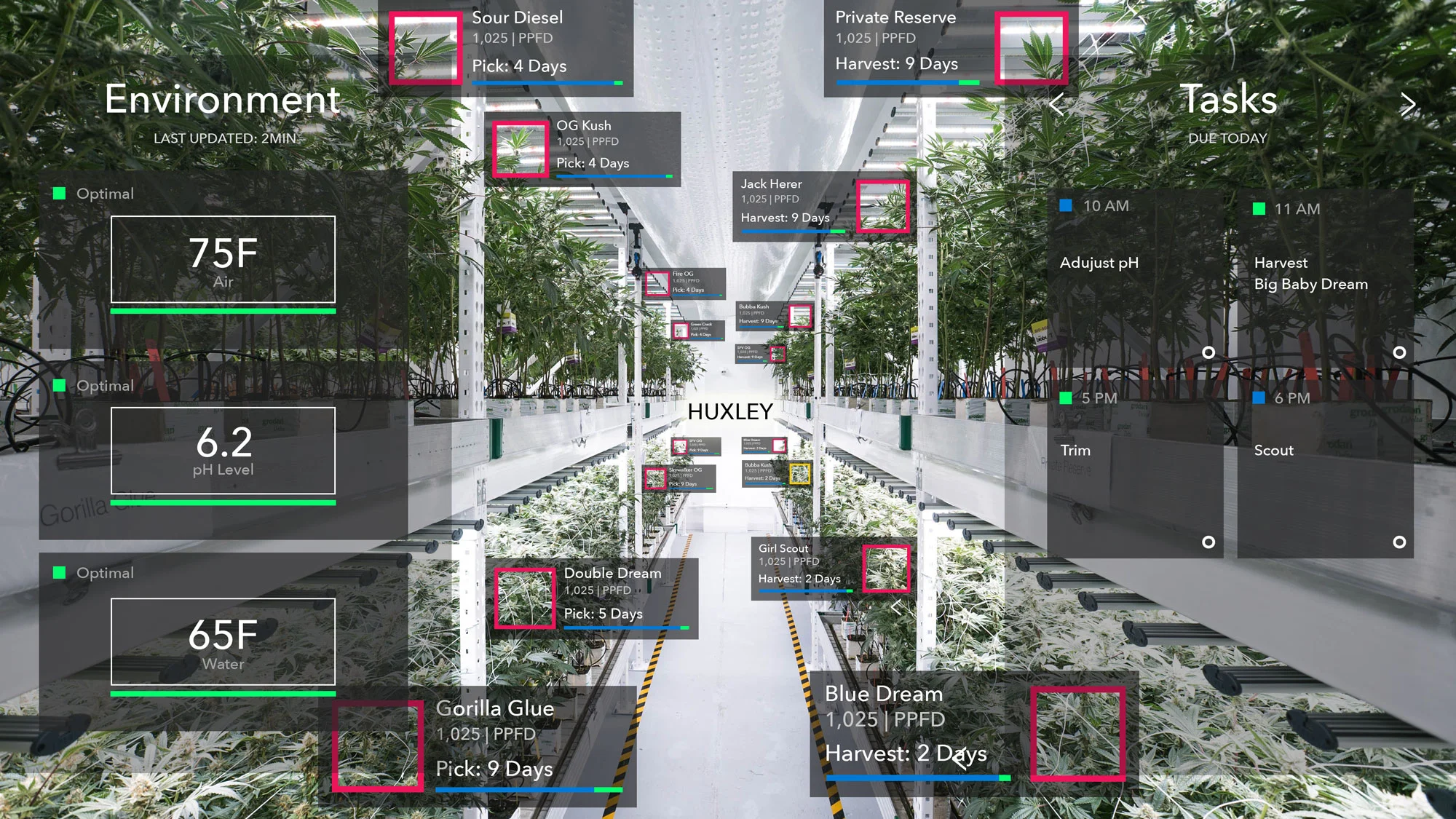
Huxley environment and task-management overlay across an indoor grow. Air 75F, pH 6.2, water 65F, live variety cards, and a time-blocked schedule.
Huxley Technologies operating layer, indoor grow room build. Environment, inventory, and task management as one continuous interface on the physical facility.

What I was studying without having the word for it yet was phenomics. A widely cited review calls it “the systematic study of phenotypes on a genome-wide scale” (Bilder et al., PMC).

Three ideas hardened in me during those years.

One. Genotype without phenotype is a map without a territory. The Human Genome Project delivered a parts list. It did not deliver a user’s manual. Freimer and Sabatti wrote the original 2003 paper that called for a Human Phenome Project. They said phenotyping, not sequencing, had become “the key rate- and cost-limiting factor in human genetics” (Bilder et al., PMC).

Two. Biology becomes exponentially more valuable once you can measure it continuously. NPEC’s TraitSeeker platform does not take one picture of a plant. It follows thousands of plants across an entire growth cycle and maps how each one responds to shifts in light, water, and nutrients (Wageningen University). The insight is not the snapshot. The insight is the trajectory.

Three. The closer you get to a living system, the more the environment is part of the organism. In plant eco-phenotyping, soil, air, light, and water are inputs to the phenotype itself. In humans, the analogues are nutrition, sleep, movement, stress, pharmaceuticals, microbiome, environmental exposures, and behavior.

By the time I was back in the US, splitting time between Madison, Minneapolis, and the coasts, the thesis had crystallized. The same measurement revolution that transformed plant science is now available for humans. Nobody has built the operating layer to run it.

Reimagining the global food and medicine supply chain will be more dramatic than any of the previous industrial revolutions combined (ryanhooks.net).

That is the gap Proto exists to close.

III · Three Words

Three words that are not the same word

Any story about Proto has to separate three terms the press keeps mashing together.

Genome.

The genetic blueprint. Three billion base pairs, largely fixed at conception, encoded in four nucleotides. The National Human Genome Research Institute is explicit that this is only half the picture. “A person’s phenotype is determined by both their genomic makeup (genotype) and environmental factors” (Genome.gov).

Phenotype.

The observable expression. Height, eye color, blood type, resting heart rate, VO2 max, fasting glucose, a rash, a mood. The NCI defines it plainly. “The observable characteristics or traits in an individual based on the expression of their genes” (National Cancer Institute).

Phenome.

The complete measurable expression of a human over time. The International Human Phenome Consortium defines it as “a set of measurable traits, including the physical, chemical and biological traits of individuals and populations, that result from the complex interactions of genes, epigenetics, symbiotic microorganisms, diet and environmental exposures” (Phenomics, PMC).

The distinction matters because the phenome is the only one that is dynamic. Your genome is essentially fixed. A phenotype is a reading. The phenome is the film. The continuous, longitudinal record of what your biology is doing across every axis, every day, for the length of your life.

That film, in every human alive today, is being continuously rewritten by inputs we already know how to measure. Nutrition. Sleep. Movement. Stress. Medications. Supplements. The microbiome. Environmental exposures. Toxins. Aging. Lifestyle.

The problem is not that the data doesn’t exist. The problem is where it lives.

IV · Fragmentation

The fragmentation problem

If you are a reasonably engaged American adult in 2026, some meaningful share of your phenome is already digitized. It is scattered across roughly nine silos that do not talk to each other.

  • Your medical record lives in Epic, the electronic-health-record system that runs the back office of most large US health systems (Epic).
  • You access a slice of it through MyChart, Epic’s patient portal (MyChart).
  • Your bloodwork lives with a laboratory. Quest, LabCorp, Function Health, Health Gorilla, a hospital lab. Each with its own units, ranges, and file formats. Function Health, one of the newest entrants, markets over a hundred lab biomarkers on subscription (Function Health).
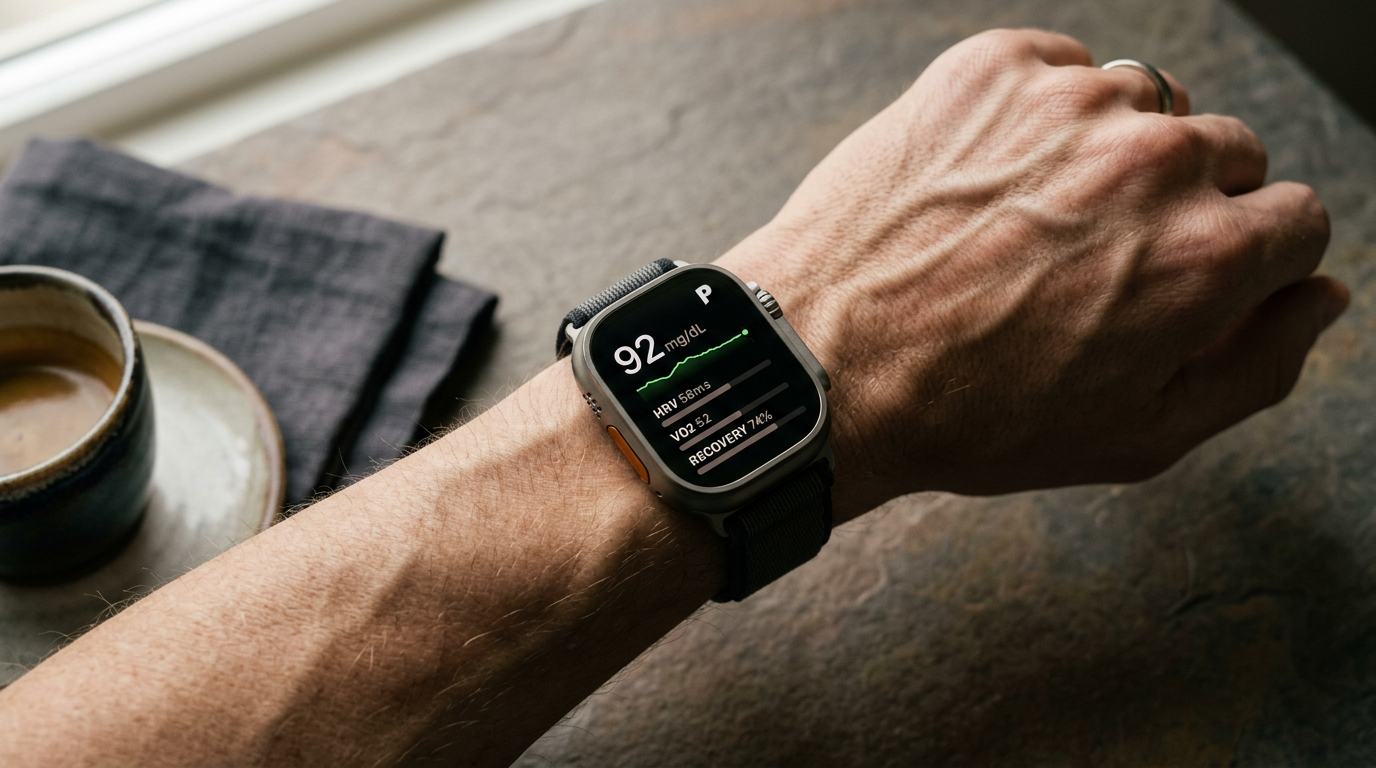
  • Your continuous physiology lives in a wearable. Apple Watch, WHOOP, Oura, Garmin. Each with its own SDK and its own opinion about recovery.
  • Your day-to-day health signals feed into Apple Health, which Apple frames as “a secure place for all your health information” on iPhone (Apple).
  • Your prescriptions live at a pharmacy.
  • Your claims data lives at an insurance company.
  • Your food intake lives in a nutrition app.
  • Your ancestry and variant data lives on a genetics platform.

Any one of these is useful. None of them describes you. No system in production assembles those signals into a continuously evolving biological profile that belongs to the person the data is actually about.

This is not a failure of intent. It is a failure of architecture. Every one of those systems was built to serve its own vertical. A hospital’s billing workflow. A lab’s throughput. A wearable’s retention metric. A pharmacy’s compliance obligation. None of them was built to serve you.

The largest human-biology datasets on Earth prove the point in reverse. The UK Biobank follows “half a million volunteers to learn who falls ill and why,” and researchers are already training AI models on those scans to diagnose rare heart conditions from a single image (UK Biobank). The NIH’s All of Us Research Program now holds data on “more than 633,000 participants,” a 50% jump from the previous release, spanning surveys, genomic analyses, EHRs, physical measurements, and wearables (NIH All of Us). The International Human Phenome Project, led by Fudan University, is drawing a navigation atlas of the human phenome that maps correlations between more than 1.5 million phenotypes across tens of thousands of participants (Fudan University).

Every one of those projects proves the same thing. Assemble the phenome and the science compounds. What none of them does, because it is not their job, is put that assembly in the hands of the individual, on a phone, at the moment they are about to order lunch.

That is Proto’s job.

V · Proto Plain

Proto, in plain language

Proto is a biological wallet.

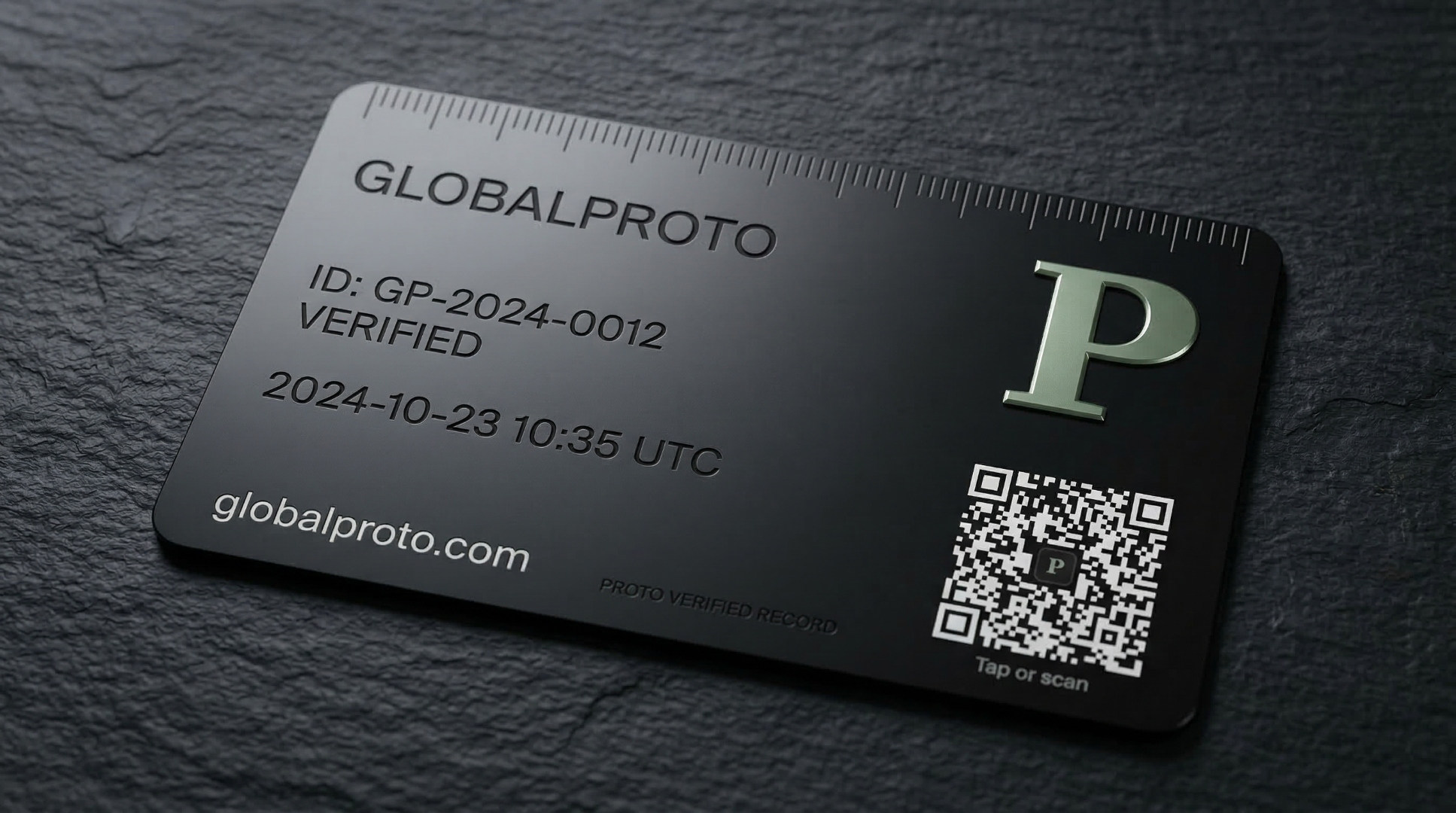
The product surface says it directly. Positioning line: “Biomarkers in Action.” Architectural line: “The encrypted wallet for your biology.” Data-flow line: “MyChart in. Verdicts out. Data never leaves your device.” (Proto)

Read those three sentences in order and you have the whole product philosophy. The engineering claim is more disciplined than the marketing line. What leaves the wallet is not raw biology. It is a categorical verdict ranked against the user’s biology, computed inside a user-custody boundary. Operators get a rank order over their own catalog. They never see the numbers behind it. That distinction, categorical-only egress within a user-custody compute boundary, is the phrase counsel prefers, and the one that survives contact with the reality of a server-side fusion engine running across iOS, watchOS, Android, and web.

Two sharper cuts, in my own words. “Function Health is diagnostics infrastructure. Proto is lifestyle infrastructure.” And: “Apple Health stores data. Proto activates it.” (ryanhooks.net)

Proto aggregates, on the user’s device and in a user-custody compute layer, an evolving profile that combines:

  • biomarkers (lab panels, blood draws, functional-medicine data)
  • wearable data (heart rate, HRV, sleep stages, VO2 max, recovery)
  • medications
  • supplements
  • nutrition (food logs, restaurant orders, grocery purchases)
  • genetics (variant data from consumer or clinical sequencing)
  • environmental exposures (air quality, light, temperature, geography)
  • recovery (sauna, cold, sleep, downtime)
  • experiences (training load, travel, life events)
  • purchasing behavior (what you actually spend money on, biologically)

Proto is not an electronic health record. It does not compete with Epic. It does not want to be the system of record for your hospital.

It is an intelligence layer. It sits on top of the systems you already have and turns them into decisions. Not “here is your data.” “Here is what to do with it in the next ten minutes.” Proto ships with a companion interface called Huxley. Proto is the stack. Huxley is the interface (ryanhooks.net). The distribution primitive is the P Button. One tap to personalize any restaurant, bar, gym, dispensary, sauna, or store against your panel.

The architectural distinction matters. An EHR is optimized for the clinician and the billing cycle. Consumer wearables are optimized for engagement. Lab platforms are optimized for throughput. Proto is optimized for one human, making one decision, right now, in the context of everything their body has told them over the last twelve months.

Privacy is not a feature bolted on top. It is the architecture. Raw biology stays inside the user-custody boundary. The intelligence layer runs against it under the user’s keys, and only categorical verdicts cross the boundary out to operators. “The user holds the keys. Proto never sees raw biomarker values in the clear” (ryanhooks.net). The token vault uses AES-256-GCM with fresh 96-bit initialization vectors and 32-byte keys held in Cloudflare Worker secrets. The canonical biomarker catalog currently spans over 220 entries.

VI · Sorting

Sorting the world around a person

Once biology has a wallet, everything the wallet touches can be sorted.

This is what separates Proto from every “health app” that came before. Prior systems asked what the user should do about their health. Proto asks a different question. What if the world around the user re-ranked itself around the user’s biology.

Consider the surfaces Proto is built to reorganize.

  • Restaurant menus sorted by which dishes fit your current glucose trajectory, lipid panel, and recovery state.
  • Grocery stores sorted by which SKUs move a specific biomarker in the direction it needs to move.
  • Supplement catalogs sorted by which formulations are indicated for your deficiencies, not the average deficiency.
  • Wellness services (sauna, cold plunge, IV, massage, breathwork) sorted by which are useful for your current training load and inflammation markers.
  • Healthcare providers sorted by fit to your actual condition profile, not by proximity or in-network status.
  • Recovery experiences sorted by nervous-system state.
  • Future marketplaces (travel, housing, everything) sorted by which options fit the biology of the person choosing.

The internal shorthand is biology-driven commerce. Shopping with biomarkers instead of demographics. In Proto’s product language, this is the Universal Menu Sort. The P Button is the primitive that puts it in the hand of any operator willing to plug in (ryanhooks.net).

For twenty years the ranking layer of the consumer internet has been advertising. A demographic-and-behavioral guess about what a person is likely to buy. That guess is a proxy. Biology is not a proxy. Biology is the ground truth the proxy was trying to approximate.

The framing is grounded. Laboratory biomarkers give you deep biological context. What your body is made of and doing, at the molecular level. Wearables give you continuous physiological context. What your body is up to right now. Together they form a two-axis map that no advertising system can approximate.

One illustration. This is Proto’s proposed framework, not an established clinical standard. We’ve built a Glucose Readiness Index (GRI) that translates continuous glucose data, sleep, HRV, and prior meal composition into a daily readiness score for how the user’s metabolism is likely to handle carbohydrate load in the next few hours. The GRI is a design pattern, not a diagnostic device. It shows what happens when biological signals stop being displayed and start being operationalized into a daily recommendation.

The larger claim is straightforward. The next economy will be increasingly informed by biology, not advertising alone. Advertising will not disappear. It will just get outperformed everywhere a ranking signal that is accurate about the individual is available.

The Architecture

One wallet. Two worlds.

Your clinic data lives with your provider. Your restaurant choices live on a menu. Proto is the layer that carries both, in your pocket, and shows you the answer.

Source

Clinic

Neko · Function · Labcorp · Epic

The layer

Proto

The wallet you carry

Source

Restaurant

Menus · Macros · Provenance

Result

You

One screen. One decision.

Clinic data and restaurant menus flow into Proto, which shows you a single answer on one screen.

VII · Efficiency

The efficiency argument

Every story about a new intelligence layer eventually has to answer the same question. What does it save. Proto’s answer is unusually concrete, because the inefficiencies it removes are already priced into the current economy. They just aren’t labeled.

Start with the diagram Proto uses internally. In the middle is the biomarker wallet. The user’s data, on the user’s device, under the user’s keys. Around it are nine spokes. Each one a vertical that already spends real money guessing at the person in the middle.

  • Food. Restaurants, grocery, CPG.
  • Supplements. Fullscript, pharmacy.
  • Fitness. Studios, gyms, coaches.
  • Wellness. Sauna, cold, spa, recovery.
  • Beauty. Fragrance, skincare.
  • Clinics. Primary care, specialists.
  • Farms. Growers, distributors.
  • Insurance. Payers, employers.

Every vertical submits its catalog. Proto ranks it against the user’s biology, privately. Operators never see the data. The user never sees the noise. That is the whole shape of the network. One hub, many spokes, one direction of trust.

Now the math the hub makes possible.

Before Proto, the world guesses what you need. Roughly 45% of a modern consumer’s health-adjacent spend goes into search and decide. The exhausting metabolic tax of comparing menus, reading supplement labels, cross-referencing reviews, and picking a clinic on vibes. Another ~25% flows into the wrong purchase. The multivitamin that duplicates your prescription, the pre-workout for a metabolism it doesn’t fit, the specialist whose panel doesn’t touch your actual issue. Another ~11% is outright waste. Food not eaten, subscriptions that lapse, appointments no-showed. That leaves, generously, ~19% of the spend that ends up an actual fit for the person doing the spending.

With Proto, the world adapts to your biology. The wallet collapses search from ~45% to ~10%, cuts wrong purchases from ~25% to ~6%, and drops waste from ~11% to ~3%. Every catalog on every spoke arrives pre-ranked against the user’s actual panel. Fit expands from ~19% to roughly ~81% of the same spend. Same money. Different destination.

4.3× more relevant purchases per dollar
−73% waste across the stack
+1 with every operator that plugs in

The three deltas that fall out of that reshuffle are the ones the operator and investor conversations turn on.

  • 4.3× more relevant purchases per dollar. Ranked by biology, not by ad spend. Same wallet. Better signal. Better outcome.
  • −73% waste across the stack. Food that gets eaten. Supplements that get absorbed. Treatments that actually target the issue. Subscriptions that keep earning their keep.
  • +1 with every operator. Every new operator that plugs into the P Button widens the supply engine. Every new biomarker sharpens the wallet. The network compounds by construction. Each additional spoke makes every other spoke more accurate.

The reason those numbers are not a marketing conceit is that the losses they remove are already on the balance sheet. UNEP’s 2024 Food Waste Index Report measured 1.05 billion tonnes of food wasted at retail, food service, and household level in 2022. Roughly 19% of the food available to consumers, on top of the ~13% lost earlier in the supply chain per FAO (UNEP / Knowledge4Policy, FAO). The US dietary-supplement category is on the order of $63.5 billion in 2024 manufacturer and brand-owner revenue (Ken Research). A large share of that consumption occurs without matched biomarker evidence of the deficiency the supplement is designed to correct. Fitness memberships churn at rates that would be scandalous in any other subscription category. Specialty clinics routinely spend the first appointment ordering the labs the patient should have walked in with. None of that is a Proto claim. It is the current-state baseline. Proto is the argument that the baseline is a routing failure, not a preference failure. Once the routing layer exists, the losses compress on their own.

Honest framing. The specific percentages above are Proto’s proposed model of the re-sort, not a peer-reviewed measurement. They describe the shape of the efficiency gain a biology-first ranking layer produces, calibrated to the internal pilots we’ve run against real menus and real panels. The peer-reviewed version comes later, out of the wallet’s own longitudinal data.

The deeper point is architectural. The new internet is one where every person gets exactly what they want, and the economy stops shouting and starts answering. Advertising is a broadcast medium pretending to be a targeting medium. It burns energy scaling messages to people who will never buy. A biology-ranked catalog is the opposite. It burns almost no energy on the wrong match, because the ranking function has ground truth about the individual it is ranking for. That is not a UX improvement. That is a thermodynamic improvement. The intelligence layer costs the network less to run than the advertising layer it replaces, at every spoke.

That is the efficiency thesis. It is why the hub-and-spokes shape matters. It is why the wallet has to come first, the layer second, the catalog third. It is why Proto’s long-horizon vision, closed-loop life-support systems in habitats that cannot afford waste, is the same system as the everyday one with the tolerances tightened.

VIII · Spome

Fuller, Asimov, and the long vision

Proto’s long horizon does not come from the wearable industry. It comes from two twentieth-century thinkers who understood earlier than almost anyone else that human life is a closed-loop systems problem.

R. Buckminster Fuller. Fuller developed what he called Comprehensive Anticipatory Design Science. A whole-systems discipline aimed at making “the world work for 100% of humanity in the shortest time possible” (Buckminster Fuller Institute). Fuller’s insight was that you can’t optimize a subsystem without optimizing the loop it sits inside. Feeding a person is a food problem, an energy problem, a waste problem, and a psychology problem. Treat any one of them in isolation and you get the pathologies of the modern industrial economy.

Isaac Asimov. In his 1966 essay “There’s No Place Like Spome,” Asimov coined spome, a contraction of space-home. He defined it as “any system, substantially closed with respect to matter, that is capable of supporting human life for an indefinitely long period of time.” Earth, Asimov wrote, is a spome. “At present, the only spome known to exist.” Closed with respect to matter, open with respect to energy, because “the energy of the Sun makes all the difference” (Proto · Asimov).

Asimov then made the move Proto has taken as its founding text. He said your body is a spome. Substantially closed with respect to matter, open to energy, dependent on continuous inputs, subject to entropy, and only maintainable through active management of what goes in and what comes out. “Spomology isn’t science fiction. It’s the oldest science of all” (Proto · Asimov).

The body is the spacecraft.ryanhooks.net

Proto’s long-term vision, the thing that sits behind the wallet the way general relativity sits behind GPS, is called Spome. Named directly for Asimov’s word.

Spome is an intelligent biological operating environment. A closed-loop system that continuously manages the nutrients, environmental conditions, physiological monitoring, and recovery of the humans inside it. On Earth, Spome takes the form of homes, hospitals, greenhouses, gyms, and wellness facilities that adapt their inputs (food, air, light, temperature, water, protocols) to the biology of the people they serve. Off Earth, Spome scales to underwater habitats, lunar bases, Mars settlements, and orbital stations. Managing matter, energy, and entropy stops being a metaphor and becomes the entire engineering problem.

This is where the vision meets published research, not fiction. NASA’s Human Research Program has fifty years of work “to protect the health and performance of astronauts in space,” organized around sustaining human biology across long-duration missions “to the Moon, Mars, and beyond” (NASA HRP). The program’s Lifetime Surveillance of Astronaut Health effort maintains longitudinal medical monitoring data across careers, and the NASA Life Sciences Data Archive holds spaceflight and ground-analog data going back to 1961 (NASA HRP). Artemis is architecting Gateway, “humanity’s first space station around the Moon,” as the staging post for the first crewed Mars missions (NASA Artemis).

Every one of those missions is, at bottom, a spome problem. What inputs does the crew need. What equilibria must the habitat maintain. What happens when energy or nutrient supply falters. How does the system detect physiological drift before it becomes physiological failure.

Proto’s bet is that the operating layer required to run a lunar habitat is the same operating layer required to run a human body on Earth. Building it on Earth first, at consumer scale, is the fastest path to the closed-loop systems humanity will need off it.

To be clear. Spome is a vision statement, not shipping infrastructure. Proto today is a biological wallet. Spome is the horizon the wallet is pointed at. You cannot build a closed-loop life-support system for Mars without first building a working, ubiquitous, continuously updated model of the human phenome on Earth. That is what the wallet is for. It is Phase Zero.

IX · Why Now

Why now

The convergence that makes Proto possible in 2026 was not available in 2016 or 2020. Four things happened in parallel. Proto sits at their intersection.

One. The phenome became a scientific project, not an aspiration. The International Human Phenome Project, launched by Fudan University in 2018 with Shanghai municipal government backing, has completed a first phase mapping more than 1.5 million phenotype-to-phenotype connections and entered a second phase spanning 23 institutions across 20 countries (Fudan University). Freimer and Sabatti’s original 2003 call became an actual international consortium.

Two. The reference cohorts crossed critical mass. UK Biobank’s half-million-participant longitudinal cohort is producing AI models trained on human biology at population scale (UK Biobank). NIH’s All of Us is past 633,000 participants and 50% larger than its previous release (NIH All of Us). The population science is real, published, and reproducible.

Three. Plant phenomics proved the pattern. NPEC and its sister facilities across the European Plant Phenotyping Network proved that combining automated measurement, controlled environment, and longitudinal data collection produces exponential returns in biological insight (Wageningen University). Every core technology used on plants has a direct human analogue. High-throughput imaging. Continuous sensing. Machine-learned trait extraction. Tightly instrumented environments. I watched the pattern up close, from inside the team that took the €2M Dutch Top Sector grant into commercial trials with Syngenta (ryanhooks.net).

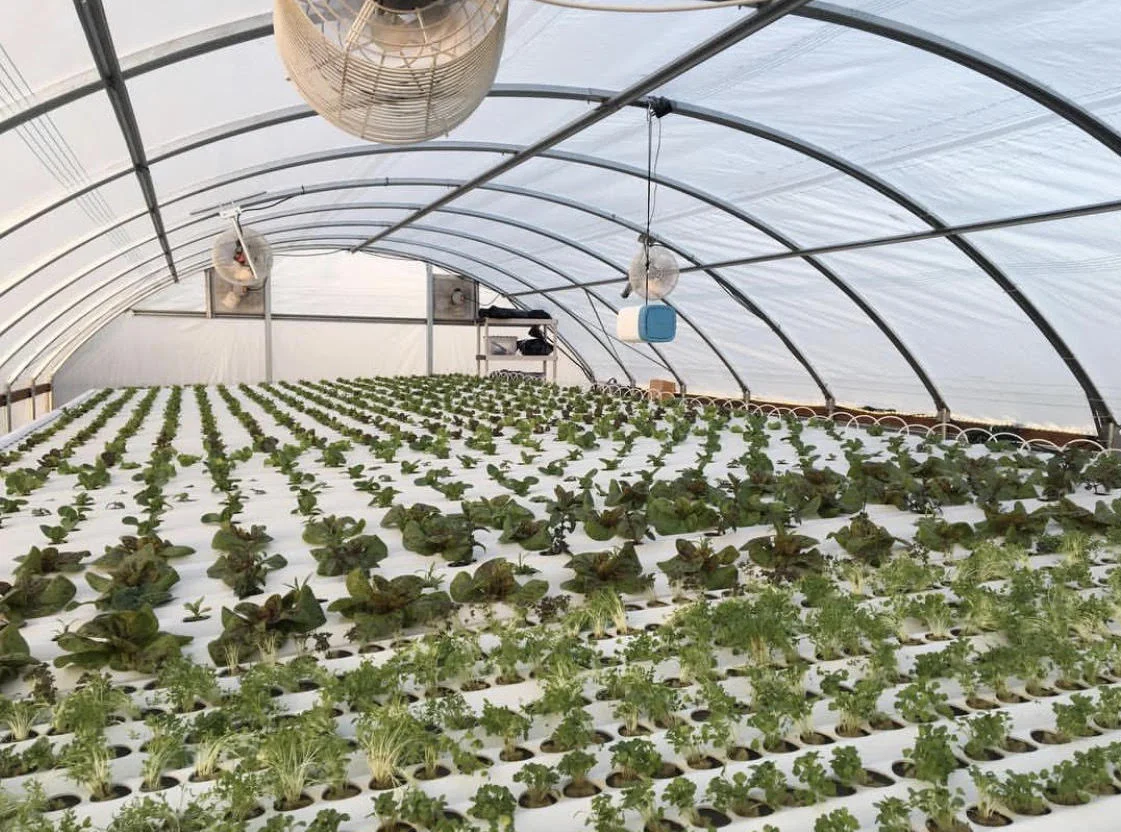
Hydroponic greenhouse interior. Dense rows of leafy greens under white polyethylene arches, drip lines, and environmental sensors overhead.
Controlled-environment agriculture at working density. Every input measured, every plant tracked, every trajectory logged. The template Proto ports to human biology.

Four. The consumer stack finally caught up. Apple Health made the phone a health hub. Epic’s MyChart made electronic health records patient-accessible. Function Health made functional-medicine bloodwork a subscription. WHOOP and Apple Watch made continuous physiology mainstream. Practitioners like Dr. Mark Hyman turned functional medicine into a household framework. Underneath all of it, NIH and PubMed made the underlying science freely queryable.

For the first time in history, the inputs required to assemble a personal phenome are all digital, all API-addressable, and all (if the user chooses) routable to a single device.

The missing piece is not another data source. It is the wallet.

X · Founder’s Frame

The founder’s frame

I describe Proto in a sequence I refuse to let anyone reorder.

Wallet, then layer, then catalog.

Wallet is the encrypted vault on the user’s device. That is where the phenome lives. Layer is the intelligence sitting on top of the wallet, turning signals into verdicts. Catalog is the sorted world the layer produces. Restaurants, supplements, providers, experiences, all re-ranked around the individual. The P Button is how any operator plugs into that catalog. Huxley is the interface a human touches.

That order matters because most companies in the space start with the catalog. They start with a store, or a service, or a recommendation, and bolt biology on afterward as marketing. Proto starts with the wallet, because without the wallet the catalog is a guess.

My own path is not a portfolio. SCAD. Broadcast production. Anthem Magazine interviews with Goodall, Gondry, Abramović. An agriculture-university founder cohort. Plant phenotyping in the Netherlands. Plant Vision™ with Syngenta at NPEC. Culinary and sauna partnerships in the US. Wearable integration on iOS and watchOS. Cloudflare-edge biomarker processing. Restaurant menu sorting. Patent drafting. It is one thesis executed across every layer of the stack, over more than a decade, in the exact order the product requires. My own frame: “Ryan Hooks is the operator. Proto™ is the stack. Huxley is the interface. The body is the spacecraft.” (ryanhooks.net)

That is why Proto does not read like a consumer app. It reads like infrastructure.

XII · What Comes Next

What comes next

Three horizons.

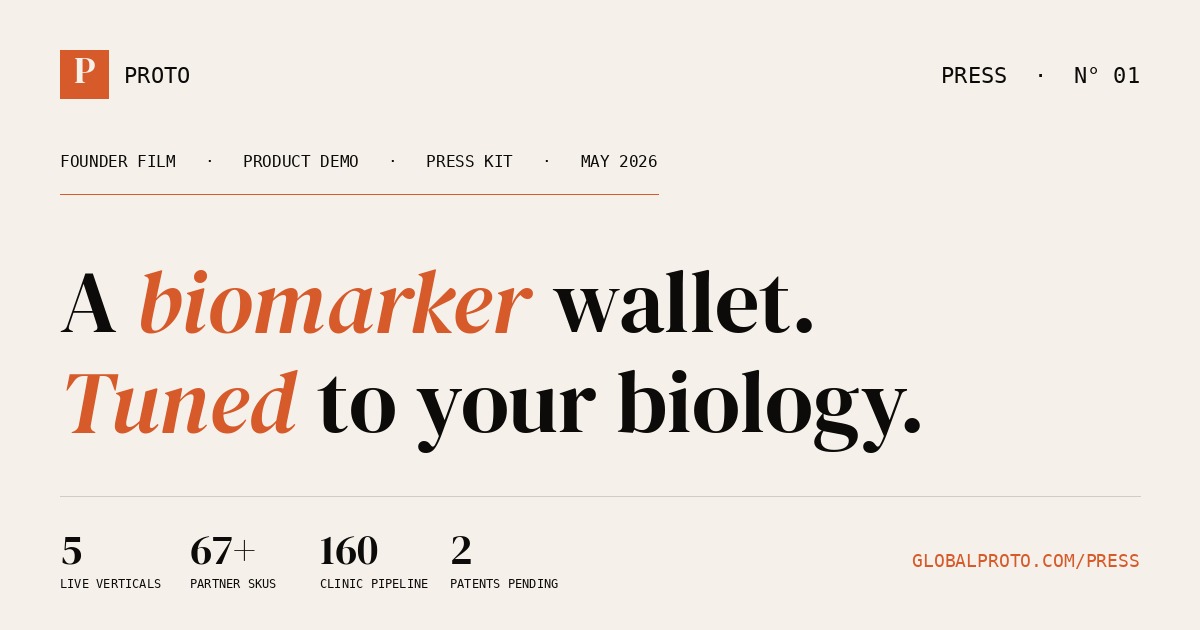
Near term. The wallet. Proto ships as a private, encrypted biological wallet on the user’s device. MyChart in. Wearables in. Labs in. Verdicts out. The scope is modest and the scope is complete. A single human, holding a single continuous model of themselves, on their own hardware, for the first time. Current pipeline: 67+ SKUs onboarded, 160 clinics in the funnel, two patents pending (ryanhooks.net).

67+ SKUs onboarded
160 clinics in the funnel
2 patents pending

Medium term. The intelligence layer. The wallet becomes the substrate for a re-ranked world. Menus, catalogs, provider networks, marketplaces. Every commerce surface the user touches acquires a biological sort order through the P Button and the Universal Menu Sort. The Glucose Readiness Index generalizes into a family of indices. Recovery, cognitive, cardiometabolic, inflammatory. Each one a translation of raw phenome into daily decision. Biology-driven commerce becomes a category, not a slogan.

Long term. Spome. The same operating layer that runs a wallet on a phone runs a habitat on the Moon. Homes learn their occupants. Hospitals become closed-loop. Greenhouses feed their residents on biomarker output, not calorie averages. NASA’s Artemis-era lunar architecture, and whatever follows it toward Mars (NASA Artemis), inherits an off-the-shelf model of human biology that was pressure-tested for a decade on Earth by the people who lived inside it.

Every civilization in history has depended on understanding its inputs and outputs. Agriculture was the first version of that discipline. Industry was the second. Information was the third.

The fourth is biology. And biology, unlike the three that came before it, is personal by construction. It cannot be tuned in aggregate the way a wheat field or a supply chain or a data center can. It has to be handled one human at a time, continuously, with the individual holding the keys.

That is the argument for the wallet. That is the argument for Proto. That is the argument for building the intelligence layer in the hands of the person the biology belongs to, on hardware they already own, under a privacy architecture that never asks them to give the biology away.

XIII · Century of the Phenome

The century of the phenome

The twentieth century digitized information. Text, image, audio, and video collapsed into bits. The industries organized around each (publishing, broadcasting, film, telephony) reorganized themselves around the internet.

The twenty-first century digitized commerce. Payment, logistics, discovery, and fulfillment collapsed into networked platforms. The industries organized around each (retail, banking, advertising, transportation) reorganized themselves around the mobile phone.

The next century will digitize and operationalize the human phenome. Nutrition, sleep, movement, medication, recovery, environment, healthcare, and commerce will collapse into a continuously updated model of the individual. The industries organized around each will reorganize themselves around biology.

Proto exists because that reorganization needs a wallet, a layer, and a catalog, in that order. And because the people the biology belongs to should hold the keys.

Humans are the most important biological system we will ever tune. Proto is building the intelligence layer that connects biology, commerce, healthcare, and everyday decision-making. Starting with a single encrypted wallet on a single phone in Madison, Wisconsin. Ending, eventually, wherever humans decide to live.

Including places that are not Earth.

Sources & References